
Clean Eating Isn't a Diet Here, It's the Default
In most places, “eating clean” means reading labels, hunting down specialty stores, and paying extra for the privilege of fresh food. In Costa Rica, it's just how the kitchen works. Produce is picked ripe instead of shipped green, fish comes off the boat the same morning it lands on your plate, and menus lean on whatever is in season because that's simply what's available and at its best.
Jaco sits right in the middle of that reality. The town is wedged between the Pacific Ocean and the fertile hills of the Central Pacific, which means every meal is close to its source, and the flavor shows it. Bright, sweet, savory, and a little smoky from the grill, this is food that tastes alive.
Here's why clean eating comes so naturally in Costa Rica, and how you can taste it for yourself on a walk through Jaco.
25%+
of Costa Rica is protected land and reserves, keeping farmland and water sources clean
365
growing days a year thanks to a tropical climate with no seasonal off-season
3-6 hrs
average farm-to-plate time for produce served in Jaco restaurants
#1
Nicoya Peninsula ranks among the world's five Blue Zones for longevity
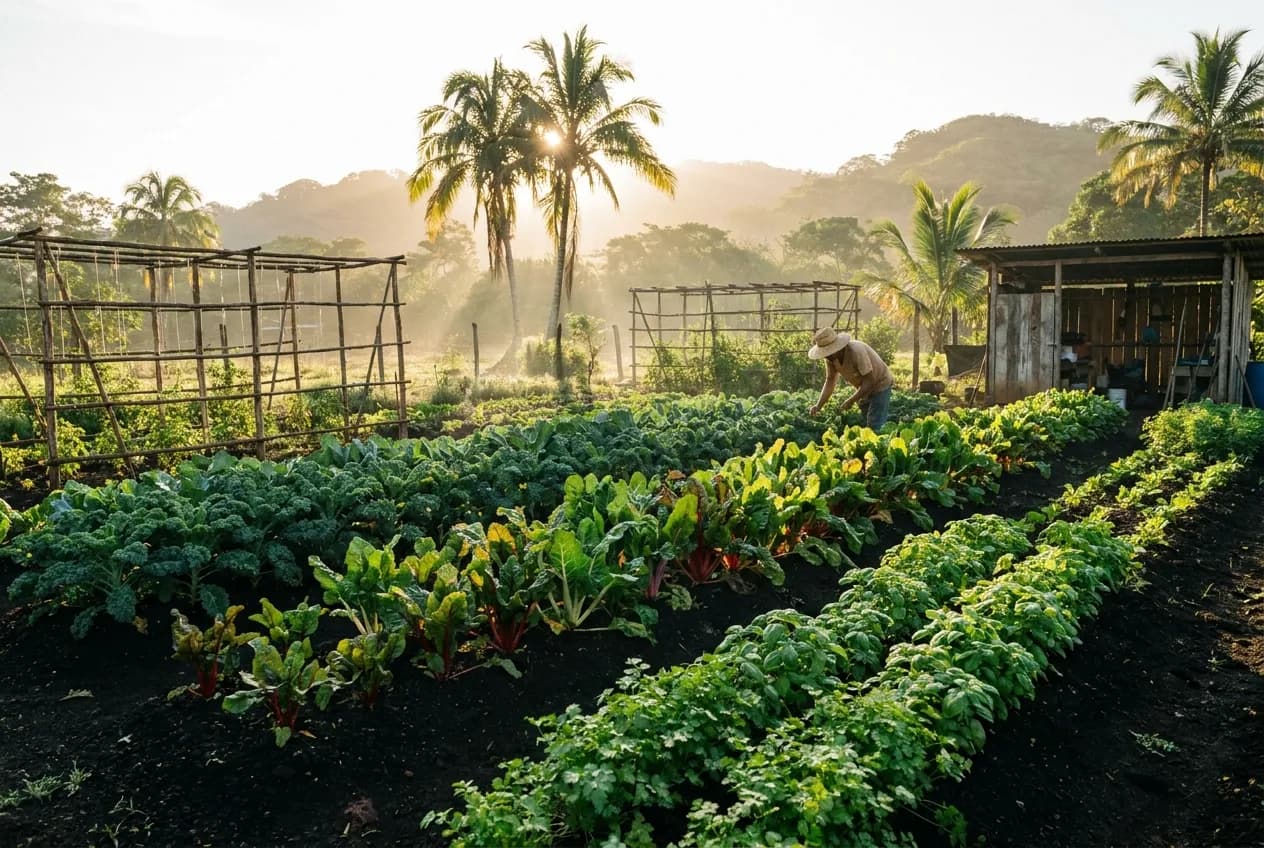
Small local farms above Jaco supply restaurants with produce picked the same day
A Year-Round Growing Season Changes Everything
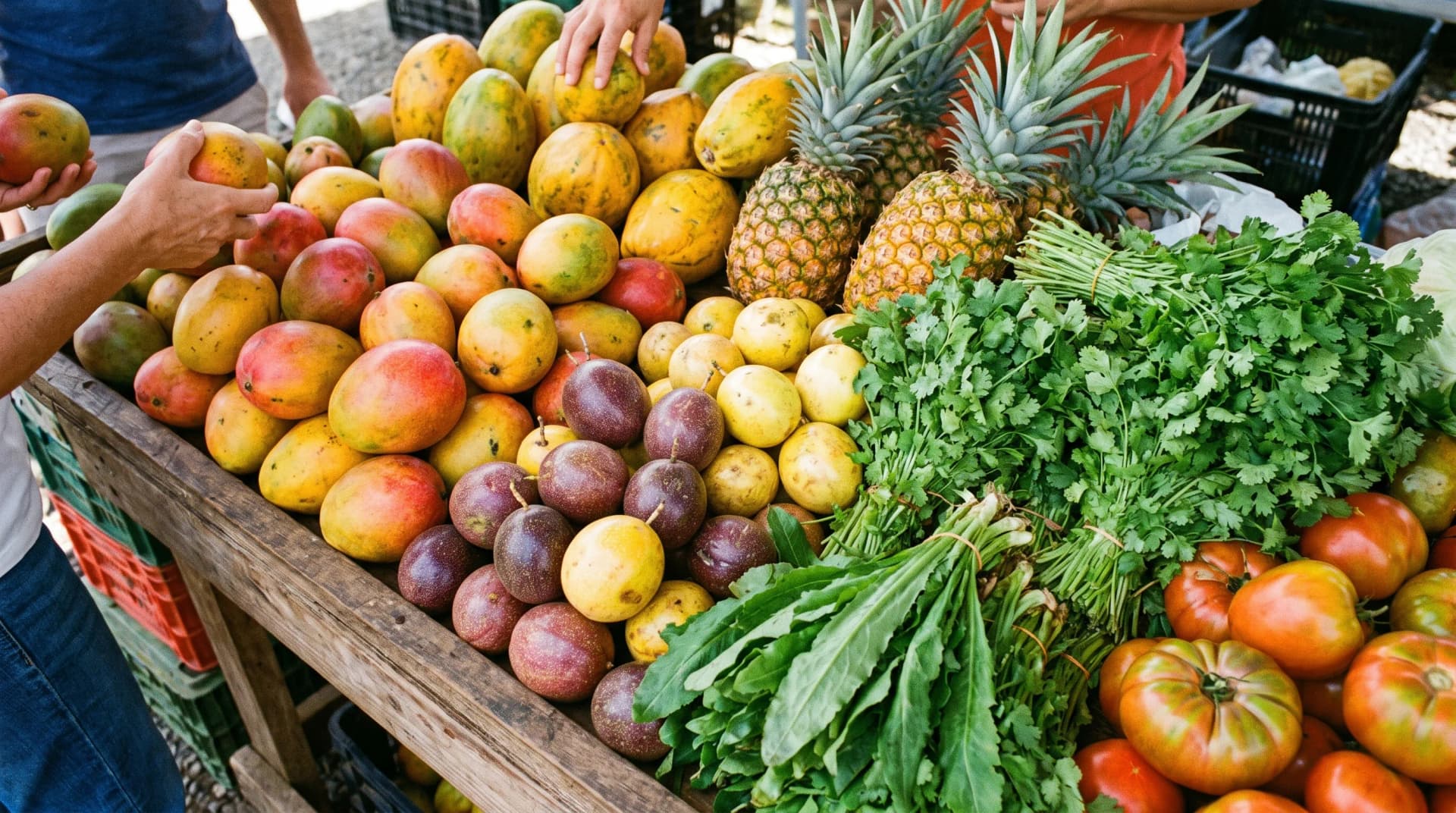
Costa Rica's tropical climate means there is no true off-season for produce. Mangoes, papayas, pineapples, and passionfruit ripen on a rolling calendar, so something is always coming into peak flavor. Leafy greens, tomatoes, and herbs grow quickly in the warm volcanic soil, which means restaurants rarely have to reach for anything frozen, canned, or flown in from far away.
That constant supply of ripe, in-season ingredients is the real secret behind why food in Jaco tastes so vivid. A tomato picked at peak ripeness and used within a day or two simply has more flavor and more nutrients than one picked early to survive a long shipping route. Clean eating, in this sense, isn't about restriction. It's about proximity.
Add in the fact that over a quarter of Costa Rica's land is protected as national parkland and reserves, and you get farmland with clean water sources and healthy soil to match. The environment itself is doing a lot of the work before a chef ever picks up a knife.
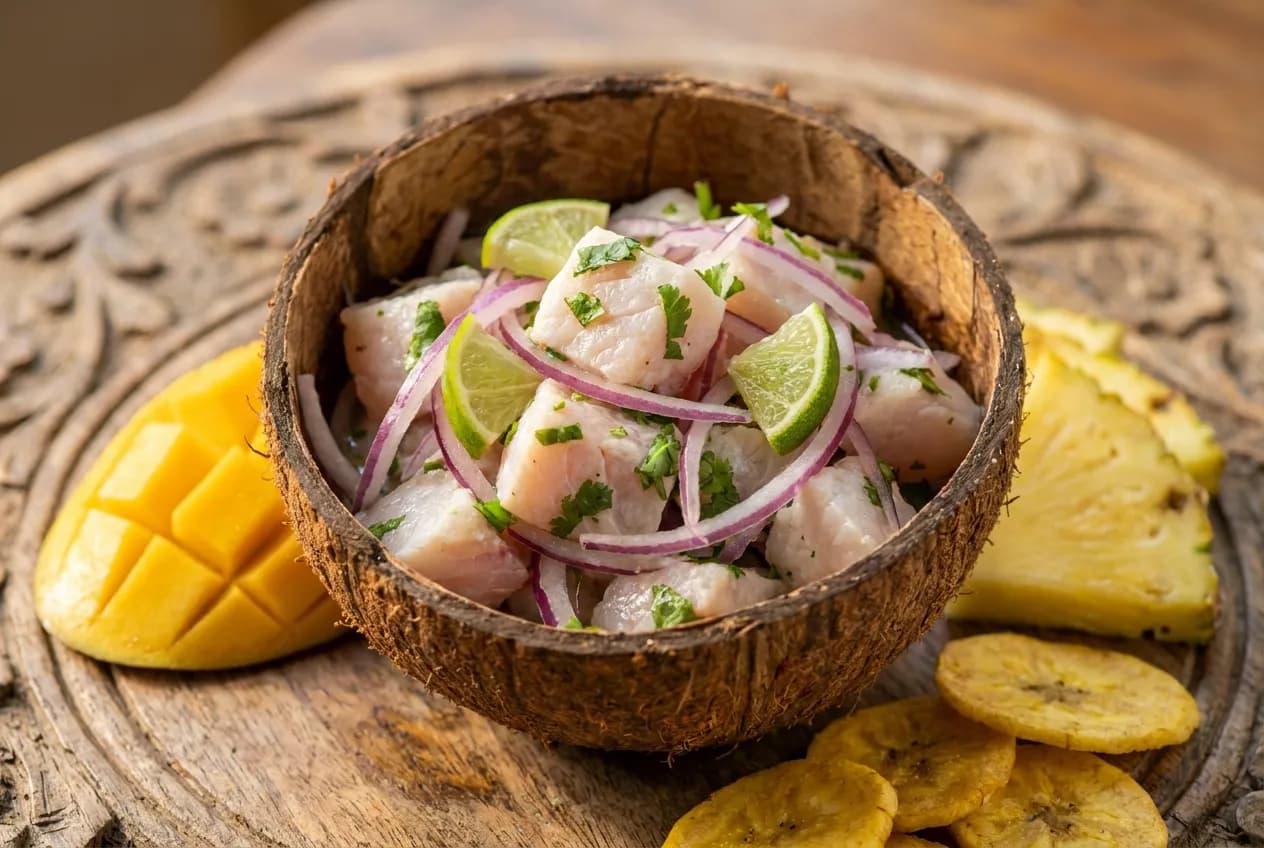
Ceviche made with fish caught that same morning off the Jaco coast
Straight From the Pacific to the Plate
Jaco's fishing boats head out before sunrise and are usually back by mid-morning, which means the corvina, snapper, mahi-mahi, and shrimp on a lunch menu were likely still swimming a few hours earlier. Ceviche, a Costa Rican staple, works precisely because of this freshness. Citrus, onion, and cilantro don't mask the fish, they highlight it.
Lean, wild-caught seafood is naturally high in protein and omega-3 fatty acids while staying low in the saturated fat that heavier, processed proteins carry. Pair that with black beans and rice in a classic gallo pinto, and you get a plate that's satisfying, balanced, and built almost entirely from whole ingredients.
Even the grilling itself tends to stay simple here. A squeeze of lime, a little salt, a handful of local herbs, and the fire does the rest. There's less need for heavy sauces or breading when the base ingredient is this fresh.
The Blue Zone Effect
An hour or so up the coast from Jaco sits the Nicoya Peninsula, one of only five regions on Earth officially recognized as a “Blue Zone,” where people live measurably longer, healthier lives. Researchers point to a diet built around beans, corn, tropical fruit, and squash, plus a culture that prioritizes fresh, whole food over processed convenience.
That same food culture runs through Jaco and the rest of the Central Pacific. Meals are built around what's fresh, portions favor vegetables and legumes alongside protein, and the “Pura Vida” mindset extends to the table, unhurried, appreciative, and rooted in real ingredients rather than shortcuts.
You don't need to move to the Nicoya Peninsula to feel that effect. A few days of eating the way Jaco eats, fresh fish, ripe fruit, beans, rice, and vegetables picked that morning, is enough to notice the difference.
Tasting It All on the Jaco Food Tour
The easiest way to experience clean eating in Costa Rica isn't to cook it yourself, it's to walk through Jaco and let local restaurants show you. Every stop on the Jaco Food Tour is chosen because it sources fresh, local ingredients, not because it's the easiest stop for a tour bus.
Guests taste ceviche made that morning, gallo pinto cooked the traditional way, tropical fruit at peak ripeness, and Costa Rican coffee grown a short drive from where it's poured. Guides explain where each ingredient comes from, so every bite comes with a bit of story alongside the flavor.
Clean eating in Costa Rica isn't about counting calories, it's about eating food close to where it grew, prepared simply, and full of flavor. That's the whole idea behind the tour, and it's a lot easier to fall in love with healthy eating when it tastes this good.