
The Land Behind the Plate
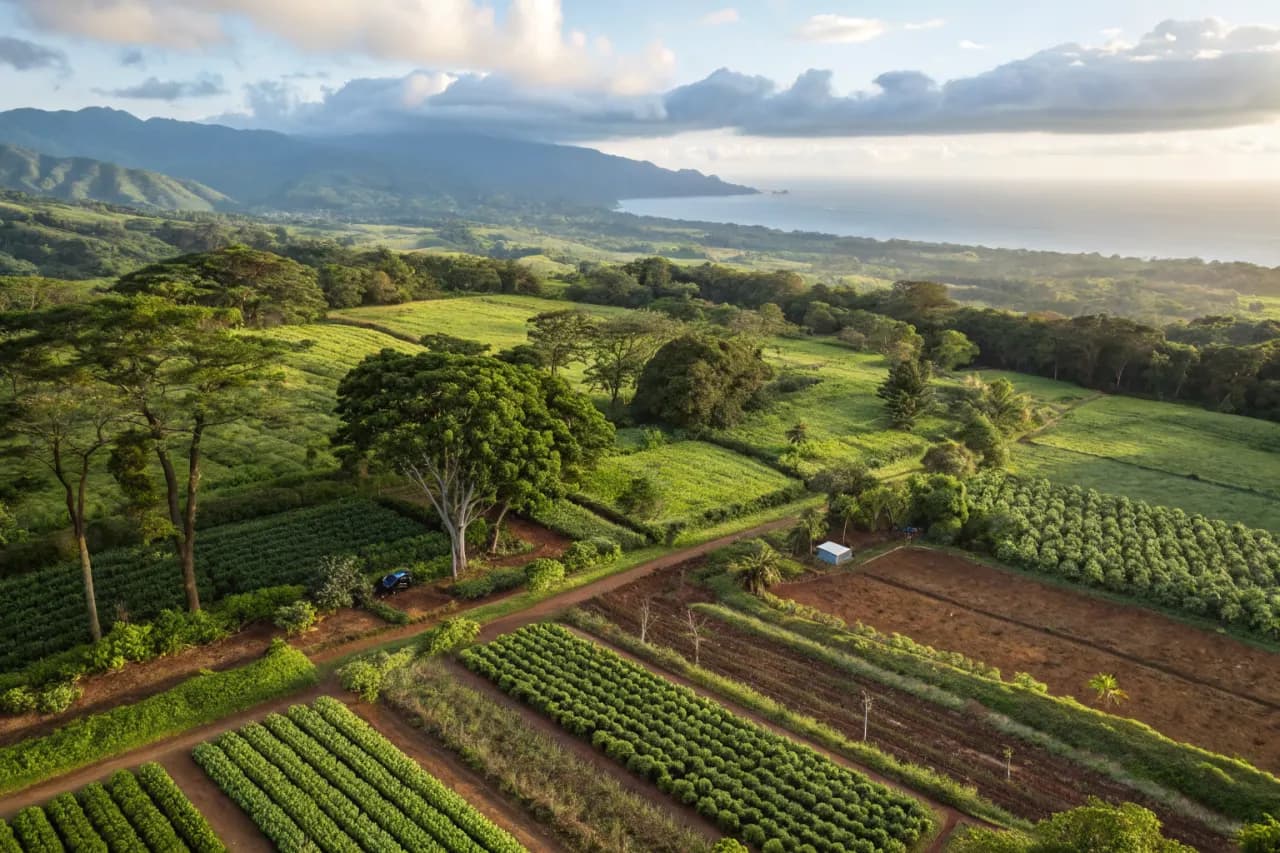
Costa Rica has long been recognized as one of the world's most ecologically conscious nations. Over 25% of its land is protected as national parks and reserves. Its rivers run clean, its forests breathe, and its farmers — many of them working the same land their grandparents did — understand in a deeply practical way that the health of the soil and the quality of the food are inseparable.
In Jaco, that relationship between land and table is felt every time you bite into something made with locally grown ingredients. The tomatoes are brighter. The herbs are more fragrant. The plantains are sweeter. This isn't marketing — it's the simple result of food that hasn't traveled far to reach you.
The farm-to-table movement, which took decades to gain traction in much of the world, has always been the default in Costa Rica. What's changed in Jaco is that chefs and restaurateurs are now making it visible — celebrating local sourcing, naming their suppliers, and building menus around what's freshest rather than what's most convenient.
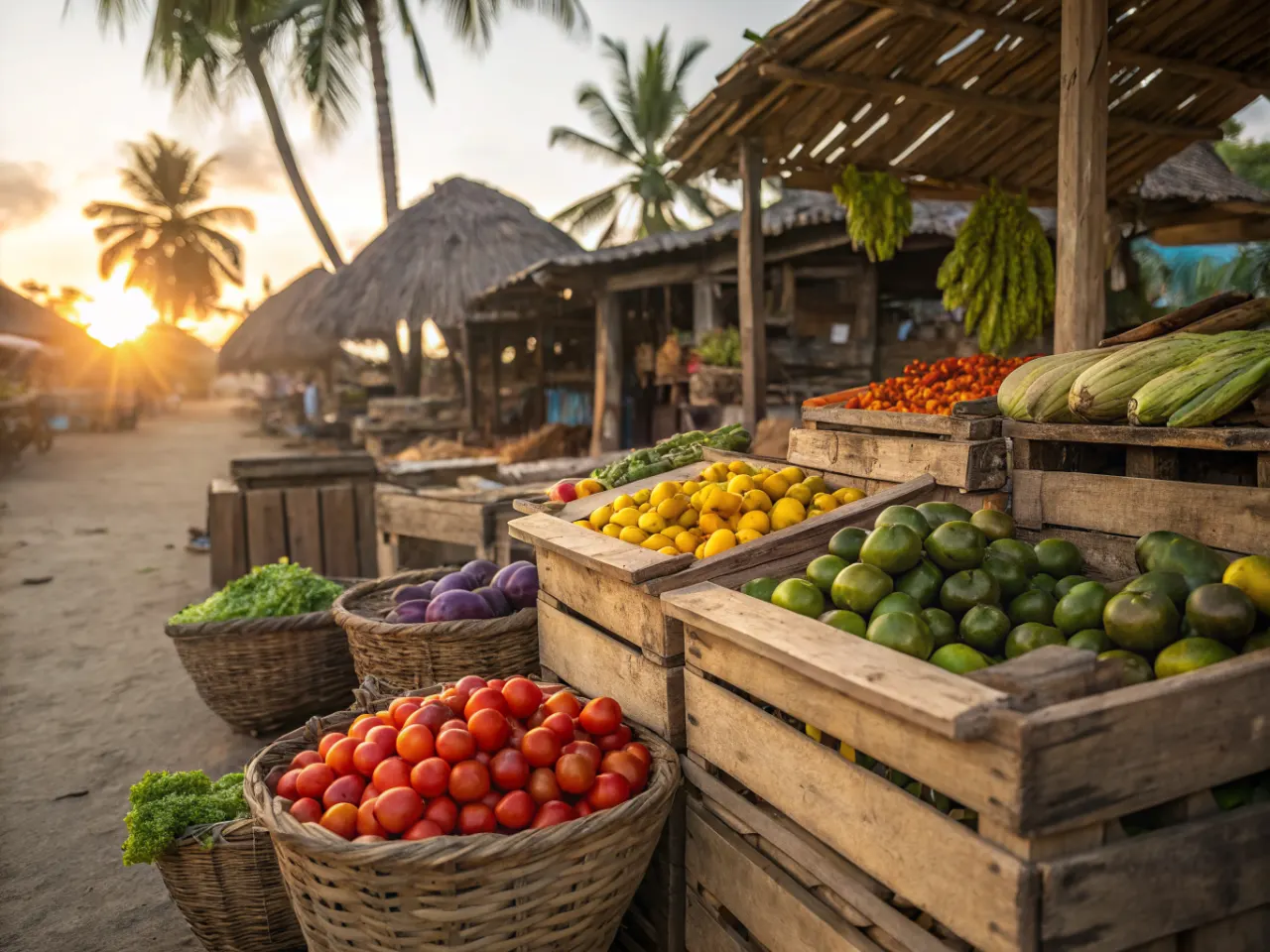
Local farmers markets supply Jaco's restaurants with produce harvested that morning
Where the Ingredients Come From
The Central Pacific region surrounding Jaco is extraordinarily productive. The warm climate, fertile volcanic soil, and proximity to both the Pacific coast and inland river valleys create ideal growing conditions for a remarkable range of crops. Farms in the hills above Jaco supply restaurants with yuca, chayote, plantains, sweet peppers, and fresh herbs. Farther inland, highlands farms contribute coffee, hearts of palm, and specialty greens.
Fishing communities up and down the coast provide daily catches of corvina, snapper, mahi-mahi, and shrimp. These arrive at dockside at dawn and appear on restaurant menus by lunch — a supply chain measured in hours, not days. For seafood lovers, this freshness is immediately apparent in everything from a simple ceviche to a grilled whole fish.
Many of Jaco's restaurants have formalized these relationships, working directly with specific farms and fishers on a seasonal basis. This isn't just good ethics — it makes practical sense. When your tomato supplier is twenty minutes away and delivers three times a week, you simply don't need to compromise on quality.
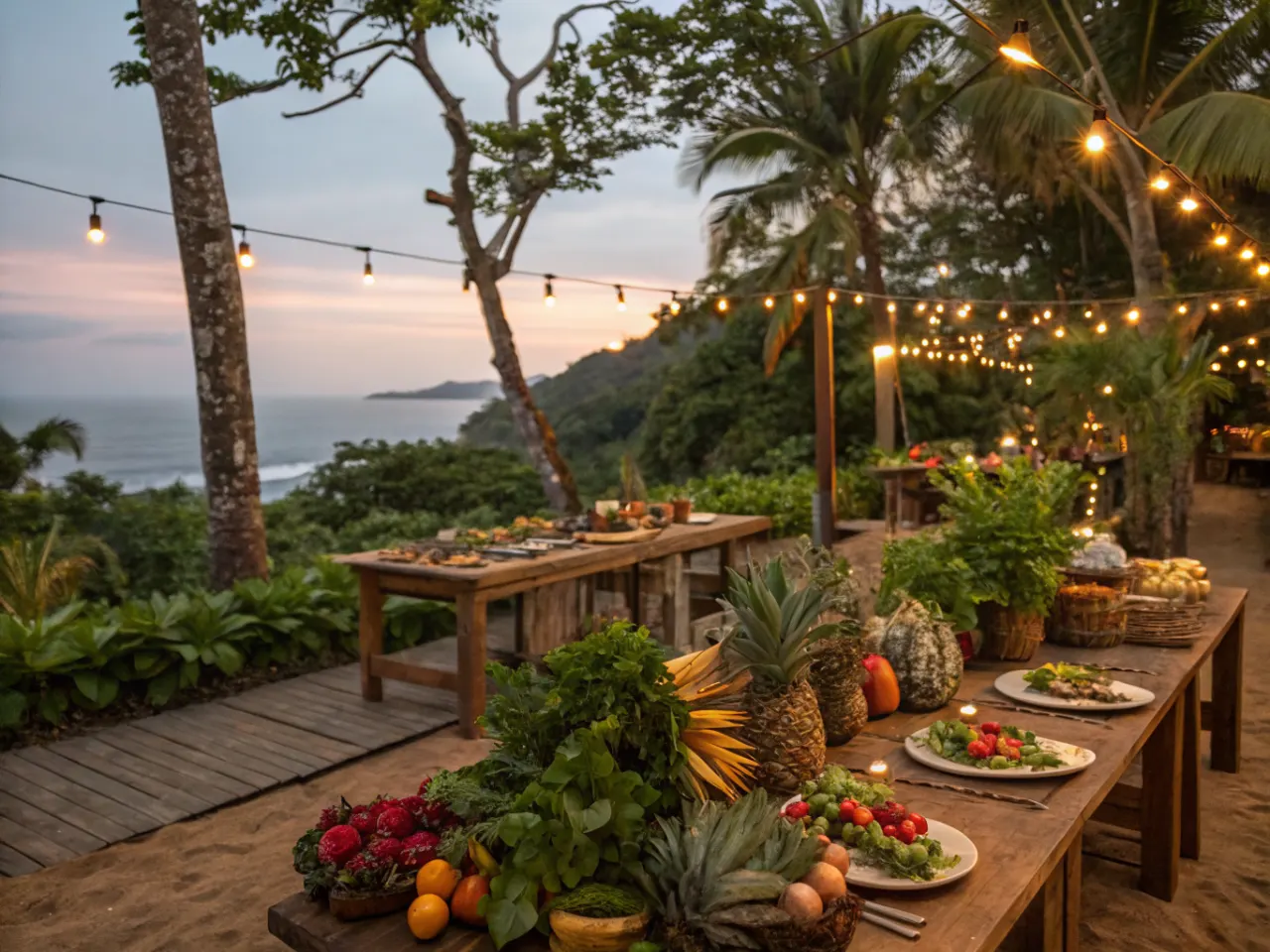
Open-air dining surrounded by the land that grew the meal
Sustainability as a Way of Life
Costa Rica's commitment to environmental stewardship goes beyond policy — it's woven into the national identity. The phrase “Pura Vida,” which translates loosely to “pure life,” captures an ethos that values harmony with the natural world. For farmers and chefs in Jaco, this translates into practices that would be considered progressive in most of the world but are simply the way things have always been done here.
Many local farms operate without synthetic pesticides, composting food waste and using natural pest management instead. Water conservation is taken seriously in a region that depends on its rivers and rainwater. Some farms have gone further, pursuing organic certification or adopting regenerative agriculture practices that actively rebuild soil health rather than just preserving it.
In Jaco's restaurants, this ethos shows up in smaller, more seasonal menus. Rather than offering the same 40 dishes year-round, forward-thinking kitchens rotate their offerings with the seasons — using what's available and at its peak, rather than forcing ingredients that have to be shipped from far away.
The Jaco Food Tour reflects this philosophy. The restaurants chosen as stops on the tour are selected not only for the quality of their food, but for their connection to local producers and their commitment to the community. When you eat on the tour, you're supporting a network of growers, fishers, and makers whose livelihoods depend on the health of this coastal ecosystem.
Coffee: Costa Rica's Most Famous Crop
No conversation about Costa Rican food culture is complete without coffee. The country produces some of the finest arabica beans in the world, thanks to its high-altitude growing regions, rich volcanic soil, and a century of expertise. Coffee is taken seriously here in a way that borders on reverence — served strong, fresh, and without much fuss, in small ceramic cups that demand your full attention.
In Jaco, locally sourced coffee from nearby growing regions like Tarrazú and the Central Valley appears on menus that prioritize provenance. Specialty coffee shops have taken hold in recent years, offering single-origin pour-overs and cold brews that showcase the diversity within Costa Rican coffee alone. But even the simple cup that arrives with your gallo pinto at a roadside soda carries that same unmistakable quality.
Drinking Costa Rican coffee in Costa Rica is one of those travel experiences that recalibrates your expectations permanently. The freshness, the balance of brightness and body, and the knowledge that the beans likely grew within a hundred kilometers of where you're sitting — it makes every cup feel different.
How the Jaco Food Tour Connects You to It
Understanding that a dish was made with locally sourced ingredients is one thing. Knowing who grew those ingredients, and why that matters to the chef who uses them, is something else entirely. This is what the Jaco Food Tour does — it adds a layer of context that transforms a good meal into a meaningful one.
Our guides are deeply embedded in the Jaco food community. They know the farmers, the fishers, and the families behind the menus. When they take you into a restaurant that sources its herbs from a family plot five minutes away, they can tell you about that family — the story of how they started growing, what they harvest each season, and how the chef first came to work with them. These aren't facts from a guidebook. They're relationships.
The farm-to-table ethos in Jaco isn't a trend or a branding exercise. It's a reflection of how this community has always fed itself — with attention, with care, and with a deep respect for the land and sea that make it all possible. When you eat on the tour, you taste all of that in every bite.