
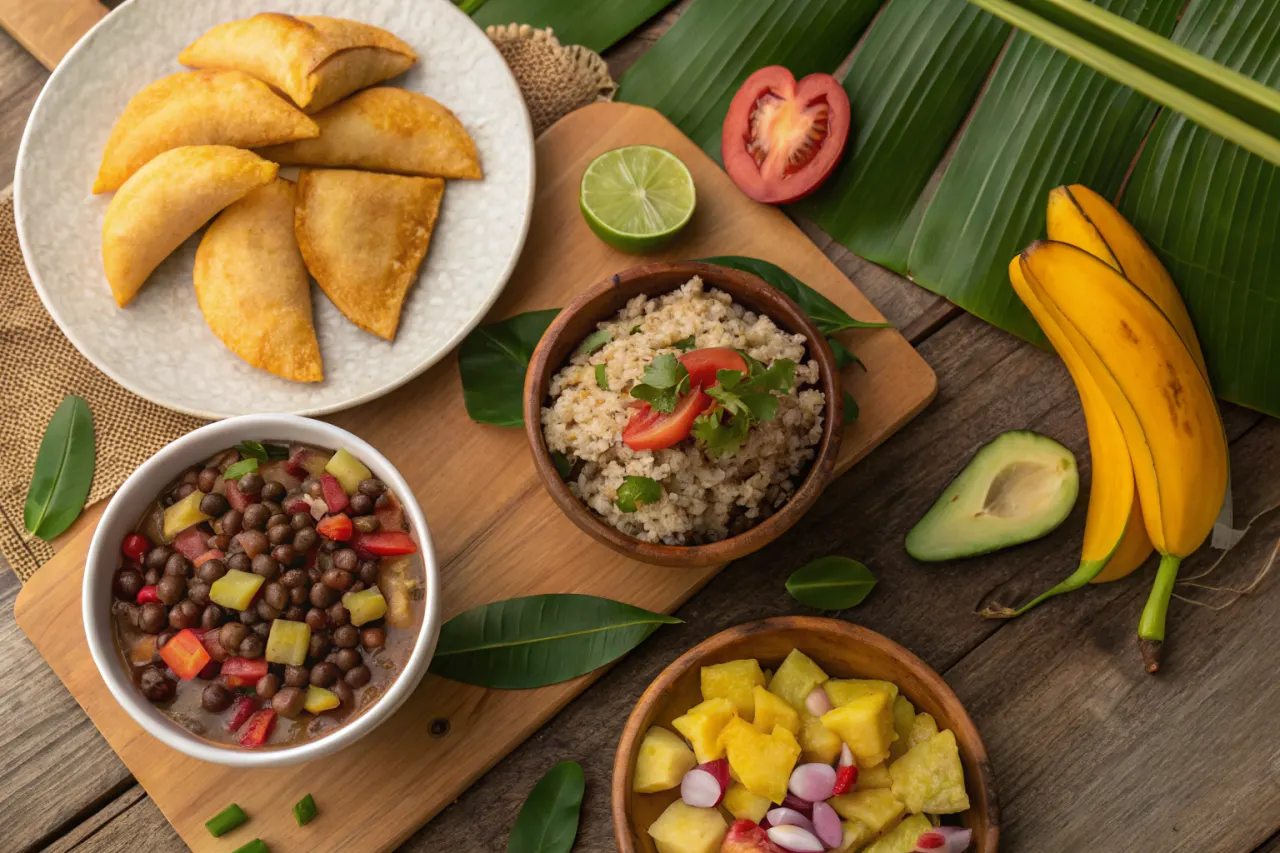
Why Jaco Is a Food Lover's Paradise
Jaco sits at the intersection of two powerful culinary worlds. On one side, you have the deep-rooted traditions of Costa Rican home cooking — dishes passed down through generations, built on simple ingredients and bold, honest flavors. On the other, you have the vibrant energy of a coastal surf town that draws travelers, chefs, and food entrepreneurs from across the globe. The result is a food scene unlike anywhere else in Central America.
Whether you're waking up to the sound of howler monkeys and heading out for your first bite, or wrapping up a day of waves and sunshine with a cold drink and something fresh, the food in Jaco has a way of anchoring you to the place. It isn't just sustenance — it's part of the experience. And knowing which dishes to seek out makes all the difference.
This guide covers the essential dishes every visitor should taste in Jaco — the ones that tell the story of the town, the culture, and the people who make it what it is. Many of these are stops on the Jaco Food Tour, where our guides bring them to life with the context and backstory that turns a good meal into an unforgettable one.
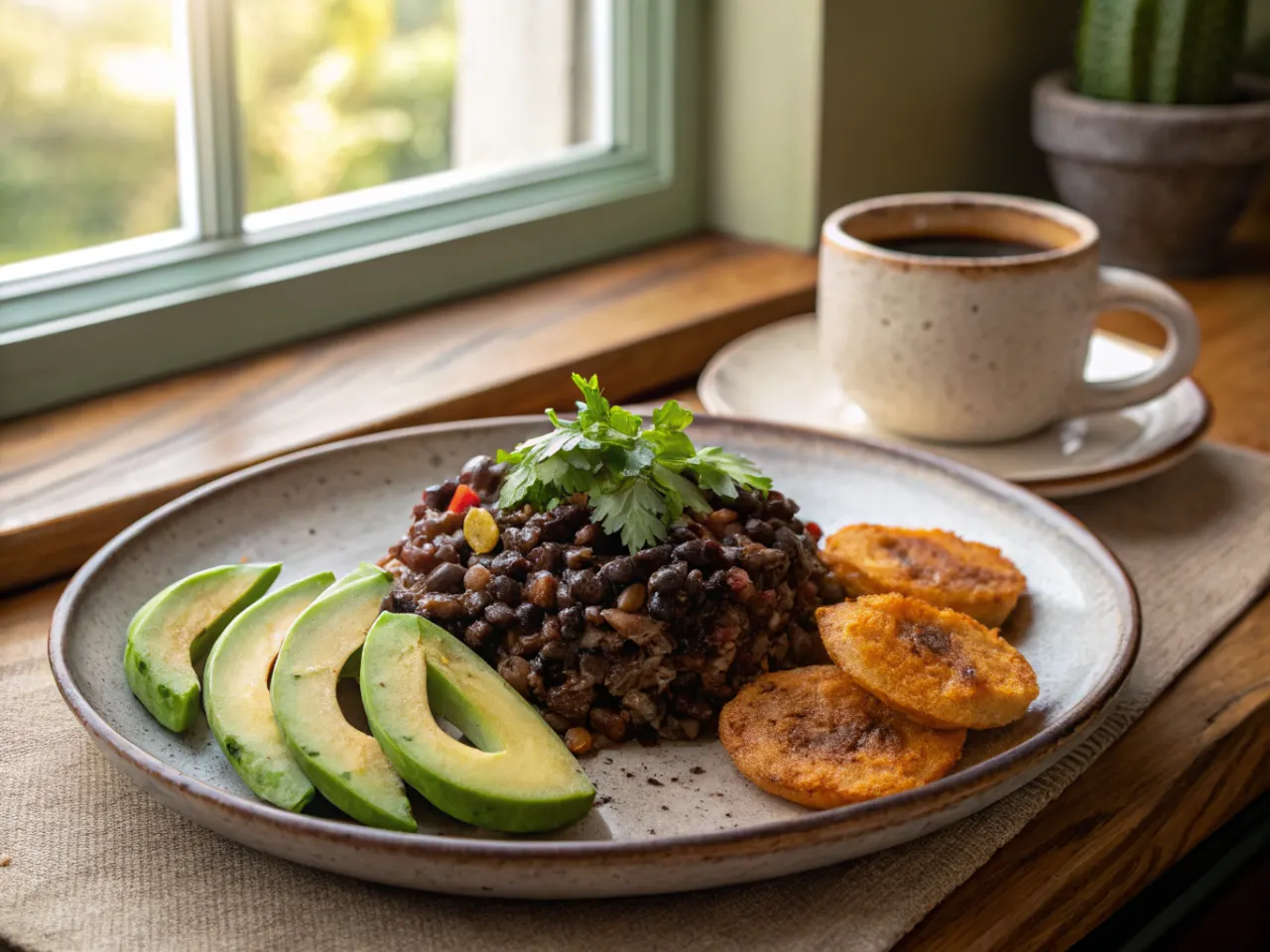
Gallo pinto — the dish that starts every Costa Rican morning
Gallo Pinto: The National Breakfast
If there is one dish that defines Costa Rican food culture, it's gallo pinto. Translating roughly to “spotted rooster,” this iconic blend of black beans and white rice is sautéed together with onion, sweet pepper, cilantro, and a generous pour of Salsa Lizano — a fermented condiment that gives it that unmistakable, slightly tangy depth.
In Jaco, gallo pinto is served at almost every breakfast counter, soda (local diner), and upscale brunch spot in town. It arrives alongside scrambled eggs, sliced avocado, sweet fried plantains, and a cup of strong Costa Rican coffee. Locals eat it every morning without question. Visitors often find themselves craving it long after they've gone home.
What makes gallo pinto special isn't just the flavor — it's what it represents. It's the first thing children eat, the dish families return to after long trips, and the meal that ties the country together from coast to mountain. To eat it in Jaco, surrounded by the sound of the ocean and the morning mist burning off the hills, is to understand something essential about this place.
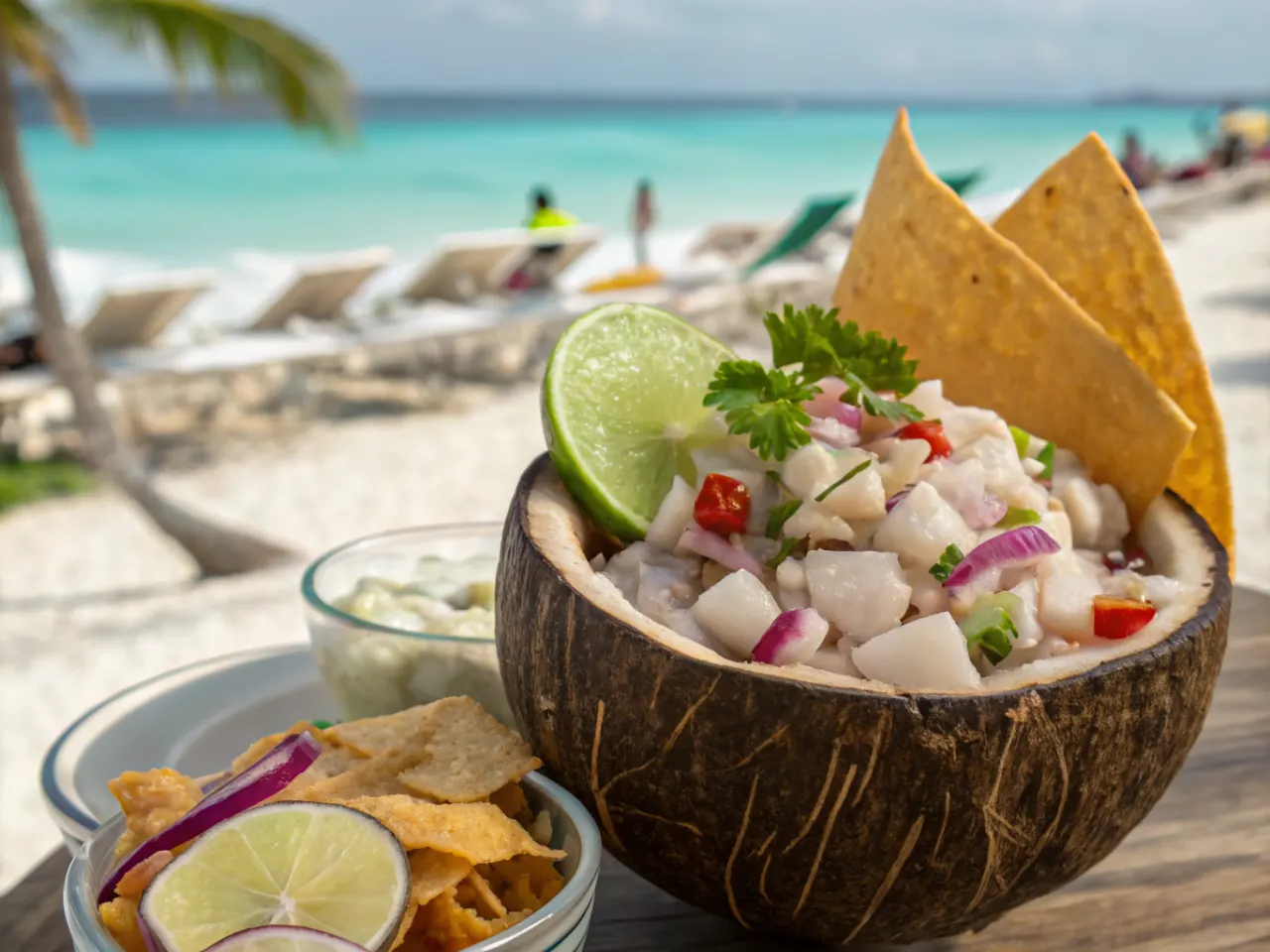
Fresh Pacific ceviche — best eaten steps from where the fish was caught
Ceviche: Fresh From the Pacific
Costa Rican ceviche is lighter and more citrus-forward than its Peruvian cousin. It's made with fresh white fish — typically corvina or tilapia — marinated in lime juice until the acid “cooks” the fish to a tender, translucent texture. Diced sweet onion, fresh cilantro, and minced sweet pepper round out the flavor profile, keeping things bright, clean, and refreshing.
In Jaco, where fishing boats come in daily and Pacific seafood is as fresh as it gets, ceviche has a particular magic. The best versions you'll find are made the same morning, not hours ahead. The fish flakes perfectly, the citrus is sharp but not overpowering, and the whole thing is served ice cold in a cup or bowl with crackers on the side.
Some of Jaco's restaurants have taken the dish further, adding mango, coconut milk, or jalapeño for a modern twist. These interpretations are worth trying, but so is the classic. On the Jaco Food Tour, guests often discover their favorite version — sometimes the simplest one, sometimes the most adventurous.
There's something about eating ceviche at a plastic table fifty meters from the beach with a cold Imperial beer in hand that no restaurant photo can fully capture. It's one of those rare travel moments where the setting and the food are perfectly matched.
Casado: The Complete Plate
The casado is Costa Rica's classic lunch plate, and it's the best way to understand the full scope of local cuisine in a single sitting. The name means “married man,” a nod to the idea that it's the well-rounded, home-cooked meal a wife would prepare — though today's sodas serve it to everyone who walks through the door.
A typical casado comes with white rice, black beans, a small salad, sweet plantains, and your choice of protein — grilled chicken, slow-braised beef, fresh fish, or pork ribs. Everything is made fresh, seasoned simply, and served without pretension. It's generous, affordable, and satisfying in a way that expensive restaurants often miss.
In Jaco, the best casados are found at small family-run sodas tucked just off the main strip — the kind of places locals go when they want a real meal. The Jaco Food Tour includes a stop that shows guests what an authentic casado looks and tastes like, far from the tourist menus that simplify or inflate the dish.
Patacones: The Perfect Snack
Patacones are twice-fried green plantain slices — smashed flat, fried golden, salted, and served hot with a variety of toppings. They're crispy on the outside, starchy and satisfying inside, and completely addictive. You'll find them as a side dish, a bar snack, or a standalone plate topped with refried beans, cheese, pico de gallo, or ceviche.
Unlike their sweet counterpart — maduro, or ripe plantain — patacones have a neutral, almost savory starchiness that works with almost anything. In Jaco, creative chefs have turned them into canvases for fusion dishes, loading them with avocado, spicy tuna, or slow-cooked pork. But the classic version, served plain with a sprinkle of salt and a bowl of salsa Lizano, is hard to beat.
If you're only in Jaco for a day and you want one snack that captures the spirit of the food scene, make it patacones. Eaten standing up, still warm from the fryer, with the ocean breeze cutting through the heat of the day — that's the Jaco experience in a bite.
Tres Leches: A Sweet Finish
No food guide to Jaco would be complete without dessert. Tres leches cake — a sponge cake soaked in three kinds of milk (evaporated, condensed, and heavy cream) — is a beloved sweet across Latin America, but Costa Rica's version has its own character. It's lighter than many regional takes, often topped with a thin layer of whipped cream and fresh tropical fruit like mango, pineapple, or passion fruit.
In Jaco, many restaurants serve tres leches with a distinctly tropical flair — infused with coconut milk, passion fruit syrup, or locally made rum. The result is a dessert that feels both familiar and entirely of this place. It's rich without being heavy, sweet without being cloying, and perfectly suited to a warm evening after a long day.
The Jaco Food Tour often ends with a sweet course that showcases just how much creativity local chefs bring to traditional desserts. It's a reminder that even the most familiar dish, reimagined with local ingredients and a coastal spirit, can feel like something entirely new.